10 tips for dog owners when their dog tends to chew things
21.01.2026Chewing is one of the most common and frustrating problems dog owners face — especially when your dog gets hold of shoes, furniture corners, or other everyday household items like the TV remote, chargers, pillows, and more. It’s important to understand that dogs don’t chew out of spite or to annoy you. In most cases, there is a clear reason behind the behavior. Common causes include boredom, stress, teething, or simply the need to release energy. Here are 10 tips to help you understand why your dog chews and how to redirect this behavior.
1. Identify what your dog chews and when
Before looking for solutions, try to notice a pattern: does your dog chew only when left alone? Do they prefer soft items (clothes, shoes) or do they go for wood and furniture? These details can give you clues as to whether the chewing is caused by boredom, anxiety, teething, or simply habit.
💡Tip: Observe for a few days when chewing happens and in what situations. This will help you identify the cause more quickly.
2. Understand that chewing is natural for dogs
Chewing isn’t a bad habit, it’s an instinctive behavior for dogs. Chewing helps your dog calm down, release tension, and keep their jaws active. The problem begins when your dog chooses the wrong things to chew. Instead of focusing only on stopping the behavior, it’s important to provide the right alternatives.
3. Offer quality and varied chewing options
Your dog should always have something safe, durable, and size-appropriate to chew on. The most important thing is that the chewing item is interesting for your dog. If the same chew is available every day, your dog may quickly lose interest in it.
💡Tip: Keep some chew toys stored away and bring them back out from time to time. This way your dog won’t have the same toys available all the time, and their interest will last longer.
4. Don’t punish your dog after the fact
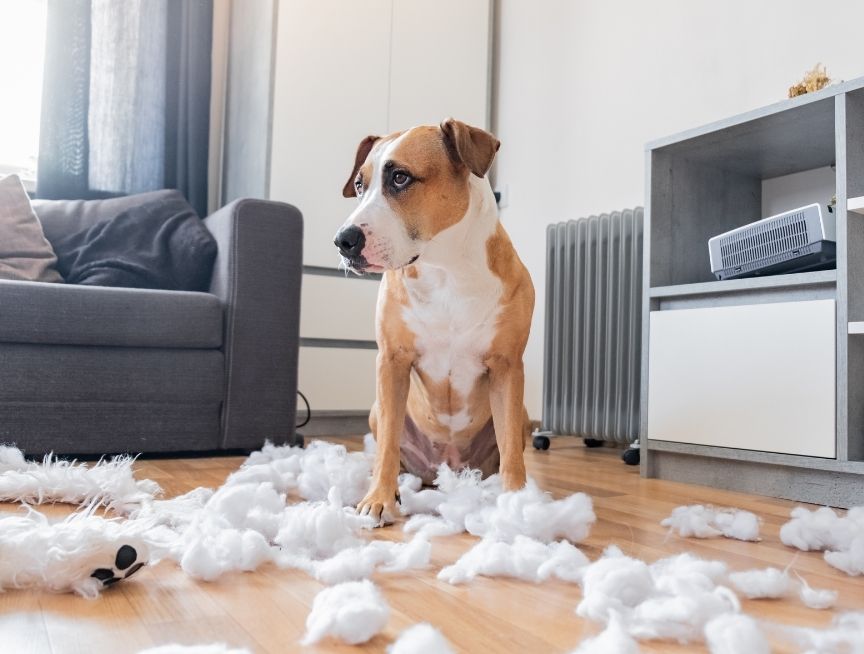
If you come home and find a chewed-up shoe, it’s easy to get upset. However, your dog can’t connect your frustration to something they did 20 minutes ago. Even if your dog’s low posture makes it seem like they “know they did something wrong,” they are often simply reacting to your tone of voice and body language. Punishing after the fact can cause fear, confusion, and increase stress.
5. A tired dog is less likely to destroy your home
One reason dogs chew furniture or other accessible items is excess energy. A dog who doesn’t get enough exercise will often find their own entertainment. Exercise doesn’t mean just a short walk around the house. Many dogs need longer walks, sniffing time, playtime, and also mental stimulation.
6. Add mental stimulation to your dog’s day
Sometimes it’s not enough for your dog to get plenty of physical exercise. Even after a long walk, they may still chew at home because they are bored and lack mental stimulation. A great solution is to offer activities that require focus, such as sniffing mats, simple indoor search games, short training sessions, and practicing commands.
7. Limit access to temptations
The easiest way to prevent chewing is to manage the environment. If your dog gets access to a shoe or the TV remote, there’s a very good chance they’ll try to chew it. To avoid this, keep loose items out of reach, close doors, and if needed, use safety gates.
A restricted area should not feel like punishment, but rather a safe space where your dog cannot chew or swallow something dangerous — especially when you are not at home. This is especially useful during puppyhood, teething, or when practicing being home alone, but also in situations where your dog chews out of boredom or anxiety. To help your dog feel calm, make sure the area includes a bed, fresh water, and suitable chew toys.
8. Don’t chase your dog
If your dog grabs something they shouldn’t and runs away with it, avoid chasing them. Your dog may see this as a game, and they quickly learn that running off with an item is fun. As a result, this behavior may start happening more often.
Instead, stay calm and call your dog to you in a cheerful voice. A good trick is to offer something better in exchange, such as a treat or their favorite toy. When your dog comes to you and gives up the item, praise them immediately. This teaches your dog that coming to you doesn’t mean losing, but leads to a positive experience.
9. Teach your dog a “drop it” command
If your dog tends to grab and chew items, it’s very helpful to teach them a clear command that makes them give up the object. Commands like “Drop it,” “Leave it,” or even another word of your choice can work. The key is to always use the same command and not change the wording depending on the situation.
You can practice the command in a simple way: give your dog a toy, calmly say “Drop it,” and reward them immediately when they let go. This helps your dog understand that giving something up does not mean losing — it brings something good. The more you use and reinforce these commands in everyday life, the easier it will be to keep chewing under control, even in unexpected situations.
10. Be patient
It’s important to remember that changing habits takes time. Breaking a chewing habit won’t happen overnight. For dogs, chewing is a natural behavior, and learning new rules requires time and consistency. If you provide suitable alternatives, enough activity, and remain consistent in your reactions, the situation will gradually improve.